The common cold typically progresses through four recognizable stages, though timing and symptom intensity can vary by person and the strength or type of virus.
Stage 1: Incubation Phase
Timeframe
Approximately 1–3 days after exposure
What's Happening?
The virus enters the upper respiratory tract and begins replicating.
Common Symptoms
- Usually none
- Sometimes mild throat irritation or fatigue
Stage 1 Cold Nutritional Support
The first thing to consider is increasing vitamin C supplementation levels. There have been over 30 clinical trials involving over 11,000 study participants to evaluate the effectiveness of vitamin C in supporting immune health during seasonal challenges. There are lots of options in capsules, gummies, liposomal forms, and powdered drink mixes. In particular, liposomal forms of vitamin C are becoming very popular due to improved absorption with less gastrointestinal side effects (gas and loose bowel movements). During acute stress or an infection, take 1,000 mg of liposomal vitamin C twice daily.5
Stage 2: Early (Onset) Phase
Timeframe
Days 1–3 of symptoms
What’s Happening
The immune system detects the virus and mounts an inflammatory response. This stage is usually when people say, “I feel a cold coming on.”
Common Symptoms
- Scratchy or sore throat
- Sneezing
- Mild headache
- Fatigue or malaise
- Clear, watery nasal discharge
Stage 2 Cold Nutritional Support
Consider a high-quality Echinacea product. There have been over 300 scientific investigations on the immune-enhancing effects of echinacea, one of the most popular herbs in fighting the common cold. Mixed results from clinical studies with echinacea are most likely due to a lack of or insufficient quantity of active compounds. Clinical trials using Echinamide, a well-defined echinacea extract containing the active compounds in ideal concentrations and ratios, showed excellent results when administered as soon as symptoms began to appear.7
Stage 3: Peak (Acute) Phase
Timeframe
Days 3–5 (sometimes up to day 7)
What's Happening
Immune response is at its strongest. Symptoms are also the most intense, and contagiousness is highest.
Common Symptoms
- Nasal congestion
- Thicker nasal mucus (white, yellow, or green—this does not automatically mean bacterial infection)
- Cough
- Hoarseness
- Mild fever (more common in children)
- Body aches
Stage 3 Cold Nutritional Support
In addition to the importance of getting quality sleep and rest, there are dietary supplements that have shown benefit in helping the immune system do its job in fighting off a common cold virus and relieving the severity of symptoms.
One of the best-researched is the use of zinc lozenges. Many clinical studies have shown that zinc lozenges provide relief for a sore throat due to the common cold,8 but there are some important guidelines to follow:
- Use lozenges supplying 15–25 mg of elemental zinc.
- Dissolve in the mouth every two waking hours after an initial double dose.
- Try to take 75 mg of zinc in a 24-hour period, but no more than this amount, and for no longer than 7 days
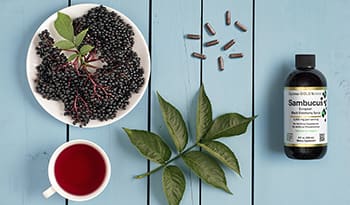
Another key recommendation is the use of black elderberry supplements. Nearly 6,000 studies published in the scientific literature show black elderberry or its components to support immune function. and exert beneficial effects if used at the onset of upper respiratory symptoms associated with the common cold.9 The most recent double-blind study showed that a person suffering from a cold taking elderberry extract would experience a lower symptom severity and, on average, a 2-day shorter duration of the cold (4.75 days vs. 6.88 days). This study provides some dosage guidelines, as the product used provided a daily dosage of 90-135 mg of anthocyanins.
Lastly, there is N-acetylcysteine (NAC), a sulfur-containing amino acid with an extensive history of use as a mucus-modifying agent to support the respiratory tract. It is also used in the body to form glutathione, the major antioxidant for the entire respiratory tract and lungs. Higher cellular levels of glutathione are associated with a better immune response in individuals. As a mucus-modifying agent, NAC helps to reduce the viscosity of bronchial secretions and improve the ability to clear mucus from the respiratory tract.10 A key goal during the acute and recovery stages of the common cold. Take 500-600 mg twice daily.
Stage 4: Recovery (Resolution) Phase
Timeframe
Days 5–10 (occasionally longer)
What's Happening
Viral load declines, and inflammation resolves.
Common Symptoms
- Gradual improvement in congestion
- Lingering cough or post-nasal drip
- Energy returns
- A cough may persist for 1–3 weeks due to airway sensitivity, even after the virus is gone.
Stage 4 Cold Nutritional Support
To assist in clearing any remaining debris in the respiratory tract and sinuses after a cold, I recommend bromelain, a group of sulfur-containing enzymes that digest protein (proteolytic enzymes or proteases) obtained from the pineapple plant (Ananas comosus). Bromelain has been shown to exert several beneficial effects, including clearing the airways, suppressing coughs, and reducing the viscosity of respiratory tract secretions.11 That can make breathing much easier. Take 500-750 mg twice daily on an empty stomach.
Supporting Immune Function Naturally
There are key lifestyle, dietary, and supplement strategies that can improve your odds of getting through the cold and flu season symptom-free. The strategies involve supporting optimal immune function.
Sleep
It starts with a health-promoting lifestyle that includes adequate quality sleep (at least seven hours each night), regular physical exercise, avoidance of harmful health habits such as smoking and excessive alcohol consumption, and following an effective stress management program that incorporates deep breathing exercises, meditation, or prayer.
Stress
Stress, lack of quality sleep, excessive alcohol intake, and smoking can all be contributors to impaired immune function and increased susceptibility to colds and infections.
Diet
Optimal immune function also requires a healthy diet that is:
- Rich in whole, natural (preferably organic) foods, such as fruits, vegetables, whole grains, beans, seeds, and nuts
- Low in fats and refined sugars
- Contains adequate, but not excessive, amounts of protein
- Includes five or six 8-ounce glasses of water per day
Supplements
When it comes to supplements, here are some foundational considerations for supporting immune function during the cold and flu season.
- A High Potency Multivitamin: A multiple vitamin and mineral formula acts as a nutritional “insurance policy” that ensures sufficient levels of key nutrients for immune function are being ingested. This dietary supplement should become part of your daily program all year round.1-3
- Vitamin D3: D3 has been shown to produce a wide range of immune-enhancing effects, including an ability to reduce the frequency of viral upper respiratory infections.4 In addition to the amount found in a multiple vitamin and mineral supplement, many health experts recommend taking 2,000-5,000IU of vitamin D3 daily to support immune function
- Vitamin C: Vitamin C literally turns on white blood cells to attack intruders and boosts antibody levels and response, secretion of hormones from the thymus, and enhances interferon, the body’s antiviral compound.5 When you have an infection or are under stress, your need for vitamin C increases. So, a separate vitamin C supplement is something else to include in your supplement routine. Take an additional 500 to 1,000 mg daily.
- Beta-Glucan: Beta-glucan polysaccharides of mushrooms and yeast, especially baker’s yeast (Saccharomyces cerevisiae), have been extensively researched in literally thousands of preclinical and clinical studies.6 Wellmune® is by far the best researched beta-glucan source with over a dozen double-blind clinical studies showing positive results in supporting the immune system. In a study of marathon runners (who experience increased infections after long runs like marathons), Wellmune significantly reduced the frequency of developing a cold by 67%. Take 500 mg daily.
References:
- Toti E, Chen CO, Palmery M, Villaño Valencia D, Peluso I. Non-Provitamin A and Provitamin A Carotenoids as Immunomodulators: Recommended Dietary Allowance, Therapeutic Index, or Personalized Nutrition? Oxid Med Cell Longev. 2018 May 9;2018:4637861.
- Reider CA, Chung RY, Devarshi PP, et al. Inadequacy of Immune Health Nutrients: Intakes in US Adults, the 2005-2016 NHANES. Nutrients. 2020;12(6):1735.
- Gombart AF, Pierre A, Maggini S. A Review of Micronutrients and the Immune System-Working in Harmony to Reduce the Risk of Infection. Nutrients. 2020;12(1):236.
- Martineau Adrian R, Jolliffe David A, et al. Vitamin D supplementation to prevent acute respiratory tract infections: systematic review and meta-analysis of individual participant data. BMJ 2017;356:i6583.
- Hemilä H, Chalker E. Vitamin C for preventing and treating the common cold. Cochrane Database Syst Rev. 2013;2013(1):CD000980.
- Zhong K, Liu Z, Lu Y, Xu X. Effects of yeast β-glucans for the prevention and treatment of upper respiratory tract infection in healthy subjects: a systematic review and meta-analysis. Eur J Nutr. 2021 Dec;60(8):4175-4187.
- Goel V, Lovlin R, Barton R, et al. Efficacy of a standardized echinacea preparation (Echinilin) for the treatment of the common cold: a randomized, double-blind, placebo-controlled trial. J Clin Pharm Ther. 2004;29:75-83.
- Hunter J, Arentz S, Goldenberg J, et al. Zinc for the prevention or treatment of acute viral respiratory tract infections in adults: a rapid systematic review and meta-analysis of randomised con- trolled trials. BMJ Open. 2021;11(11):e047474.
- Mocanu ML, Amariei S. Elderberries-A Source of Bioactive Compounds with Antiviral Action. Plants (Basel). 2022 Mar 10;11(6):740.
- Šalamon Š, Kramar B, Marolt TP, et al. Medical and Dietary Uses of N-Acetylcysteine. Antioxidants (Basel). 2019;8(5):111.
- Manzoor Z, Nawaz A, Mukhtar H, Haq I. Bromelain: Methods of Extraction, Purification and Therapeutic Applications. Braz. Arch. Biol. Technol. 2016;59:e16150010.
DISCLAIMER:
These statements have not been approved by the Food and Drug Administration. These products are not intended to diagnose, treat, cure or prevent disease.

























































 Table of Contents